 EN
 INA
UNUD–ANU Collaborative Research Strengthens Postgraduate Education Through Student Thesis Development
Denpasar, Bali – 16 November 2026. The ongoing research collaboration between the PRIME research team at the Faculty of Medicine, Universitas Udayana (UNUD), and The Australian National University (ANU) continues to create opportunities for integrating international collaborative research into postgraduate education.
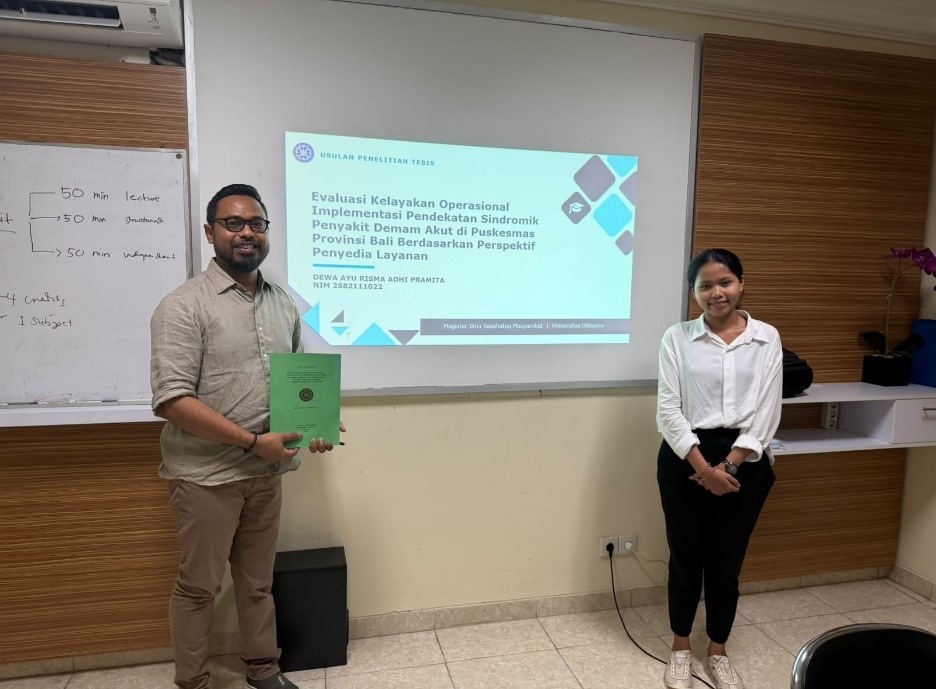
One example is the master's thesis of Dewa Ayu Risma Adhi Pramita, a student of the Master of Public Health (MIKM) Program, Faculty of Medicine, Universitas Udayana. On Monday, 16 November 2026, she presented her thesis proposal entitled “Evaluation of the Operational Feasibility of Implementing a Syndromic Approach to Acute Febrile Illnesses in Primary Health Centers in Bali Province from Healthcare Providers' Perspectives.”
Integrating Collaborative Research into Student Learning
The UNUD–ANU collaborative project aims to develop a practical syndromic surveillance approach for the early detection of climate-sensitive acute febrile illnesses with outbreak potential in primary healthcare settings. The approach is particularly relevant for diseases such as dengue, chikungunya, leptospirosis, rickettsioses, and typhoid fever, which often present with overlapping clinical symptoms and may be difficult to differentiate in settings with limited laboratory diagnostic capacity.
The project has progressed through several stages, including indicator development, a Delphi consensus process, instrument development, healthcare worker training, and field data collection across ten primary health centers in Bali.
As a member of the PRIME research team, Risma has been actively involved throughout the collaborative research process, gaining firsthand experience in research planning, instrument development, field implementation, and data collection. Her participation has provided valuable opportunities to strengthen research competencies while working alongside researchers from Universitas Udayana and ANU.
Building upon this experience, Risma developed her master's thesis to evaluate the operational feasibility of implementing the syndromic approach in routine primary healthcare services. Her study focuses on healthcare providers' perspectives, particularly regarding compatibility with existing clinical workflows, staff workloads, and available resources.
The findings are expected to contribute practical recommendations for refining the surveillance instruments and implementation procedures within the broader collaborative research project.
Strengthening Academic Quality Through International Collaboration
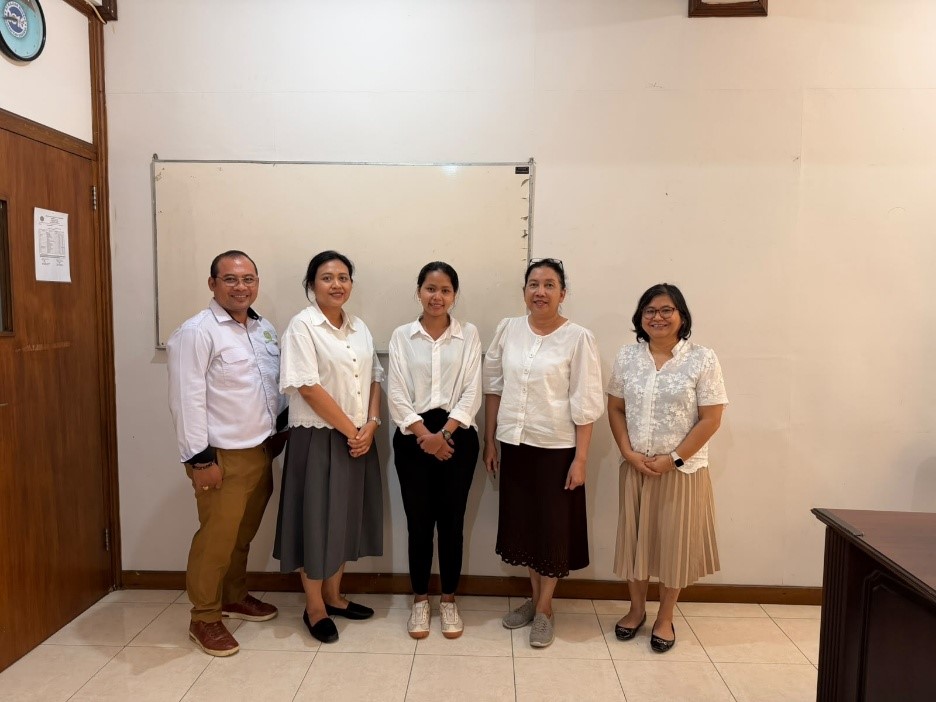
The thesis proposal examination was supervised by Dr. dr. Anak Agung Sagung Sawitri, MPH, and Dr. dr. Ni Made Sri Nopiyani, MPH. The examination committee included Dinar Saurmauli Lubis, S.KM., MPH, PhD, Dr. Sang Gede Purnama, S.KM., M.Sc., and Associate Professor dr. I Nyoman Sutarsa, MPH, PhD, FHEA, from The Australian National University, who served as an external examiner.
The involvement of an ANU academic provided an opportunity for international academic exchange and constructive feedback on the proposed research, particularly its methodological approach and relevance to public health practice. The recommendations from the examination will be incorporated into the refinement of the thesis proposal before the next stage of research.
This activity demonstrates how international research partnerships can extend beyond joint scientific projects to support postgraduate education and academic development. By actively involving students in collaborative research and engaging international academics in thesis examinations, the MIKM Program continues to strengthen research-based learning, international academic engagement, and the development of public health research competencies.

FACULTY OF MEDICINE