 EN
 INA
Through PERNAS JPHIV 2026 and the INDOQI-HIV Collaborative International Symposium, experts, service providers, government representatives, and communities discussed service integration, sustainable financing, PrEP innovations, and health system resi
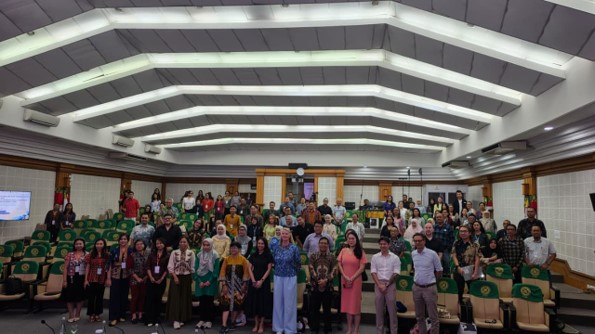

DENPASAR, October 19, 2026 — The Center of Excellence for Higher Education in Science and Technology (PUI-PT) Center for Public Health Innovation (CPHI) at Udayana University reaffirmed its role as a bridge connecting research, healthcare quality improvement, and cross-sectoral collaboration in Indonesia’s HIV response. This commitment was reflected through the convening of the 2026 National Meeting of the Indonesian HIV Research Network (PERNAS JPHIV), held jointly with the INDOQI-HIV Collaborative International Symposium on Quality Improvement on October 16–17, 2026, at the Faculty of Medicine, Udayana University, Sudirman Campus, Denpasar.
Attended by more than 200 academics, researchers, healthcare workers, program managers, development partners, and community representatives both in person and online, the forum brought together Indonesian experiences with insights from international experts from Thailand, Australia, the Netherlands, Singapore, and Malaysia. Carrying the theme “Reimagining Integrated HIV Services in a VUCA Era: Advancing Equity, Innovation, and System Resilience”, the meeting positioned equitable access, innovation, and service resilience as inseparable components of HIV control efforts.
PERNAS JPHIV 2026 was organized by the Indonesian HIV Research Network (JPHIV) in collaboration with PUI-PT CPHI Udayana University, the Master of Public Health Study Program at the Faculty of Medicine, Udayana University, and the INDOQI-HIV Collaborative. The opening ceremony featured remarks from the Organizing Committee Chair and Head of PUI-PT CPHI, Prof. dr. Pande Putu Januraga, M.Kes., DrPH, alongside the Coordinator of the Master of Public Health Study Program, Dinar Saurmauli Lubis, S.KM., MPH, Ph.D. The event was officially opened by the leadership of the Faculty of Medicine, Udayana University.
CPHI Brings the Quality Improvement Agenda from Data to Service Practice
One of PUI-PT CPHI’s primary contributions to this symposium was introducing a quality improvement (QI) approach rooted in real-world challenges at healthcare facilities. In his presentation, Prof. Pande Putu Januraga emphasized that expanding access does not automatically translate into high-quality care. Antiretroviral therapy continuity, viral load testing, patient experience, and stigma reduction must be evaluated as core indicators of HIV service performance, rather than merely counting the number of enrolled patients.
Through the INDOQI-HIV Collaborative, CPHI and its partners developed a quality learning network across six sites in six provinces. A baseline program evaluation conducted in October–November 2025 encompassed 608 service users and 17 healthcare workers. Initial findings indicated relatively positive interpersonal patient experiences, while highlighting room for improvement in the comfort of discussing sensitive issues, tuberculosis screening, as well as leadership readiness and a culture of quality within facilities. Insights from these sites serve as a foundation for designing measurable service improvements, rather than representing all HIV facilities across Indonesia.
This approach becomes increasingly relevant as HIV services face multilayered challenges: increasingly complex patient needs, fragmented referral pathways, stigma within healthcare settings, and resource uncertainties. CPHI encourages every improvement initiative to be guided by clear targets and indicators—such as accelerating treatment initiation following diagnosis, following up with patients lost to care, improving viral load record-keeping, and ensuring PrEP clients receive necessary follow-up care.
National and International Experts Discuss System Resilience, Financing, and Integration
Keynote speaker Prof. dr. Yodi Mahendradhata, M.Sc., Ph.D., FRSPH from Universitas Gadjah Mada discussed lessons learned from pandemic preparedness for HIV services amidst volatile and uncertain conditions. He illustrated how mobility restrictions, economic pressures, and administrative barriers can undermine service continuity. The core message of his presentation underscored the importance of designing services that are not only formally available, but genuinely accessible to populations facing the greatest barriers.
From a financing perspective, Dr. Adiatma Yudistira Manogar Siregar from Universitas Padjadjaran addressed the sustainability challenges of the HIV response as international funding declines. Health economics assessments and program prioritization are vital to ensure limited domestic resources are utilized effectively without neglecting vulnerable populations. This discussion was complemented by Prof. Januraga’s insights on refining service delivery processes as a strategy to sustain long-term program effectiveness.
Regional experiences were shared by Rena Janamnuaysook, MBA from the Institute of HIV Research and Innovation (IHRI), Thailand. She presented community-led health service models, including HIV self-testing, more flexible prevention services, and linkages to sexual and mental healthcare. Thailand’s example demonstrated that community engagement is not merely a form of participation, but can become an integral part of a recognized, publicly funded service delivery system.
Meanwhile, Dinar Saurmauli Lubis reviewed strategies for maintaining HIV service continuity during outbreaks, disasters, conflicts, or funding shocks. Differentiated service delivery, more flexible medication dispensing, community support, digital referral pathways, and contingency plans must be established before crises occur. Thus, health system resilience is reflected in its capacity to keep patients connected to prevention and treatment when normal operations are disrupted.
From Advanced HIV Disease to Maternal Health and Service Stigma
On the second day, Prof. Dr. dr. Evy Yunihastuti, SpPD-KAI from Universitas Indonesia highlighted the complexities of managing advanced HIV disease, including late diagnosis, treatment interruption, and opportunistic infections. Prof. Dr. dr. Yanri Wijayanti Subronto, Ph.D., Sp.PD-KPTI, FINASIM from Universitas Gadjah Mada emphasized the integration of HIV care with primary healthcare, tuberculosis, sexually transmitted infections, mental health, and non-communicable diseases. Such integration is increasingly critical given the growing need for long-term care among people living with HIV.
Maternal and child health issues were addressed by Prof. Kitty W.M. Bloemenkamp from University Medical Center Utrecht, the Netherlands, under the theme “Leaving No Mother and Child Behind”. She stressed the importance of a continuum of care spanning antenatal check-ups, HIV testing, antiretroviral therapy initiation, viral suppression monitoring, and infant follow-up. Her presentation also linked this approach to strengthening the triple elimination program—targeting HIV, syphilis, and hepatitis B—as well as maternal care networks across Indonesia.
Social dimensions and patient rights received dedicated attention through presentations by Gracia Valeska P. Simanullang, Ph.D. from PPH Unika Atma Jaya and Rayner Kay Jin Tan, Ph.D. from the National University of Singapore. Both speakers reminded participants that discrimination, confidentiality concerns, and intersecting stigma can deter individuals from seeking care even before their first clinic visit. Measuring patient experience, ensuring facility accountability, and fostering meaningful community involvement must be positioned as core components of quality improvement.
IMPRESS Survey and PrEP Forum Connect Research with Policy Agendas
CPHI’s research contributions also took center stage in the Indonesian PrEP Research & Implementation Forum, a dedicated track focusing on pre-exposure prophylaxis (PrEP)—medication-based HIV prevention for individuals requiring protection. A/Prof. Benjamin R. Bavinton, Ph.D. from the Kirby Institute, UNSW Sydney, outlined disparities in PrEP access across the Asia-Pacific region alongside opportunities for long-acting prevention options, noting that price affordability and health system readiness remain essential prerequisites.
During the 2026 IMPRESS Survey dissemination workshop, dr. Gede Benny Setia Wirawan, MGH, MIDI—a researcher affiliated with the Kirby Institute and CPHI Udayana University—presented study findings on utilization patterns, access barriers, and preferences for PrEP service delivery models. The cross-sectional survey conducted in May–June 2026 gathered 2,247 valid responses, with the PrEP analysis focusing on 1,643 HIV-negative participants. The findings reinforced the need for community-friendly services, flexible delivery options, more accessible information, and non-prohibitive financing. Given its community- and social media-based recruitment, these findings should be interpreted in accordance with the sample characteristics.
The session also featured research on oral PrEP uptake by Jessica Gloria Mogi from the Oxford University Clinical Research Unit (OUCRU), the importance of repeated outreach contact by Ni Luh Budi Febriani from Yayasan Kerti Praja, and the utilization of Tele-PrEP services by Dita Putri from Puskesmas Halmahera, Semarang. The discussion forum brought together researchers with government representatives, international partners, and communities to formulate implementation steps relevant to on-the-ground needs.
Regarding program sustainability, dr. Hendry Luis from UNAIDS Indonesia discussed the necessity of prevention financing plans that safeguard choice and equitable access. Dr. Norman Chong from the Kirby Institute shared Malaysia’s experience in building government support for PrEP services, demonstrating the vital role of policy leadership, implementation research, and community partnerships. Prof. Januraga also underscored the need to evaluate the continuity of PrEP protection and follow-up quality, rather than focusing solely on the number of new users.
A Meeting Space for Researchers and Communities, Beyond an Academic Forum
Beyond keynote and plenary sessions, PERNAS JPHIV–INDOQI-HIV 2026 provided a platform for more than 50 research presentations, parallel scientific sessions, student presentations, and poster exhibitions. Studies presented covered clinical care, maternal and child health, prevention innovations, financing, youth engagement, and stigma reduction initiatives. Awards for Best Oral Presenter, Best Poster Presenter, and Most Favorite Poster were also presented at the closing ceremony in appreciation of participants’ scientific contributions.
The involvement of community organizations and partner networks served as a vital element of the forum. Contributing partners included Jaringan Indonesia Positif, the Kirby Institute, Bali Mandara Hospital, Yayasan Bali Peduli, Yayasan Kerti Praja, Yayasan Siklus Sehat Indonesia, and Bali Medika. The diversity of stakeholders involved demonstrated that strengthening the HIV response requires collaborative action among service providers, researchers, policymakers, and the individuals who directly use or support these services.
For PUI-PT CPHI Udayana University, this symposium simultaneously served to reinforce the position of public health research as a foundation for practice transformation. Through the INDOQI-HIV Collaborative network, the IMPRESS survey, international partnerships, and community dialogue, CPHI advocates that scientific findings should not stop at publications or conferences, but rather be utilized to set priorities, improve patient experiences, and ensure HIV services remain inclusive, high-quality, and sustainable.
.jpeg)
MEDICAL FACULTY