 EN
EN
 INA
INA
For the past two weeks – 23 Aug to 8 Sep 2026, students from seven Field Epidemiology Training Programs (FETPs) in Indonesia, including FETP Universitas Udayana, have been deployed to disaster-affected areas, working alongside local health teams in monitoring public health conditions and identifying potential health threats.
One important part of the deployment has been the development and regular review of Situation Reports (SITREPs). Beyond documenting case numbers and field activities, SITREPs provide a practical tool for understanding what is changing in the field—such as increases in disease occurrence, clustering of cases, disruptions in health services, or emerging environmental and sanitation concerns.
For outbreak detection, this means looking beyond the numbers. An increase in reported cases should trigger questions: Is this higher than expected? Are cases clustered in a particular place or population? Is further verification or epidemiological investigation needed?
In this way, SITREP supports the progression from data to information, signal, verification, and response.
Throughout the deployment, field findings and SITREPs were also regularly discussed through Zoom meetings involving students, mentors, FETP coordinators, and supporting teams. These meetings provided opportunities for feedback, clarification of findings, identification of information gaps, and guidance on priorities for subsequent field activities. This continuous feedback process helped connect field observations with epidemiological interpretation and action.
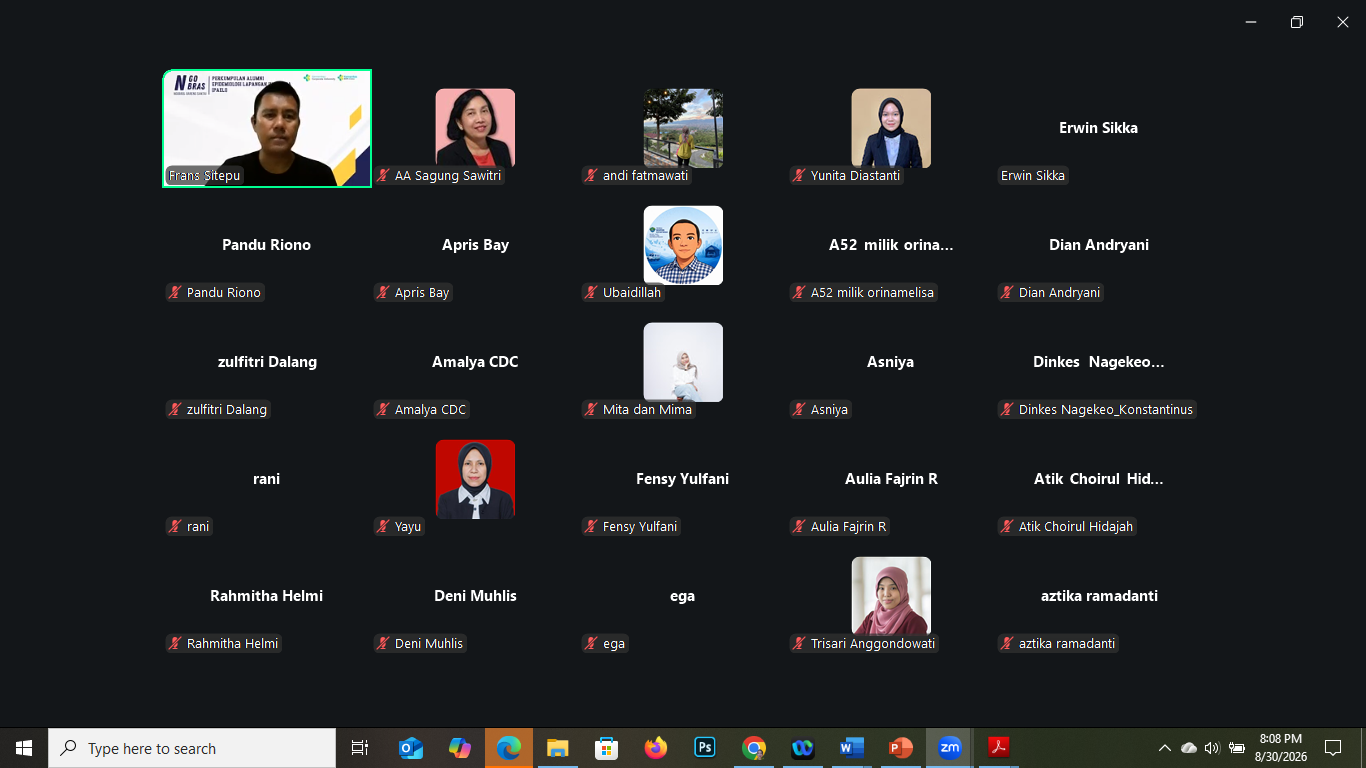
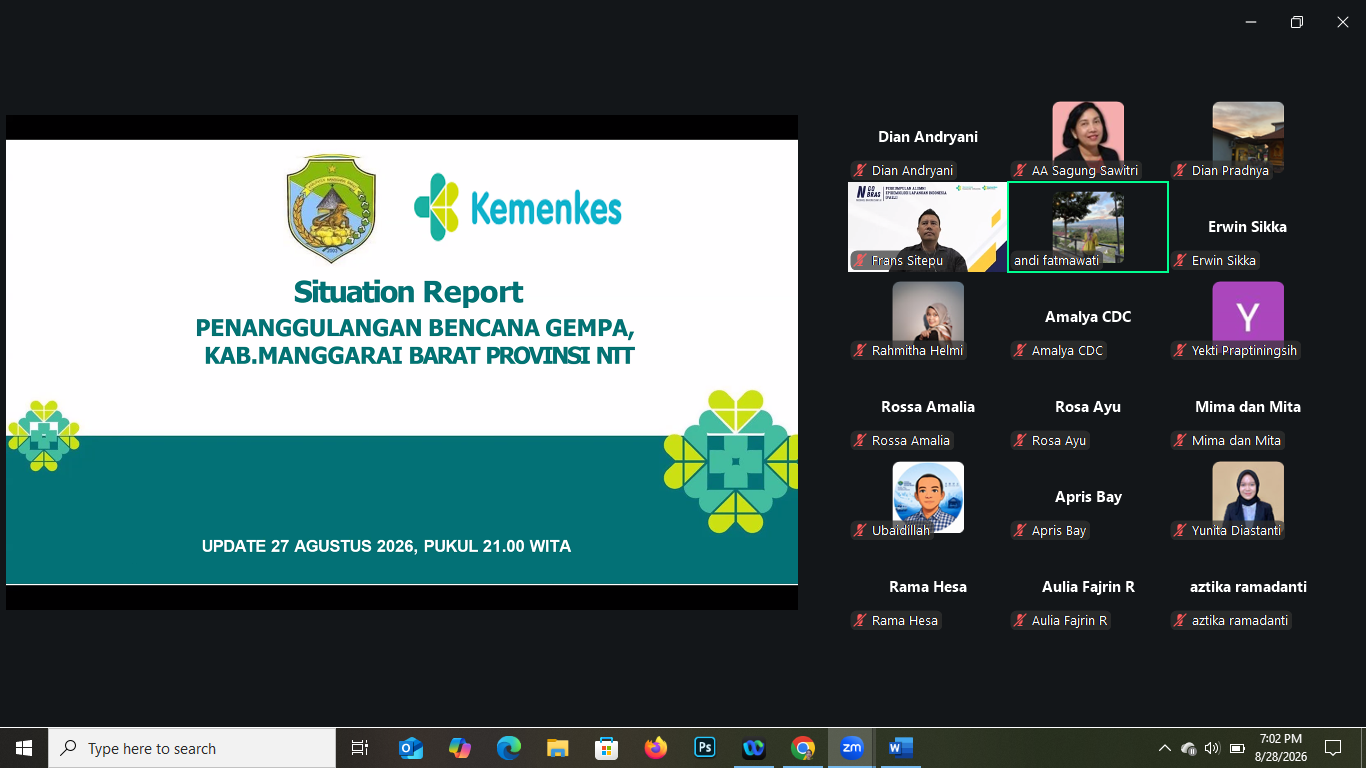
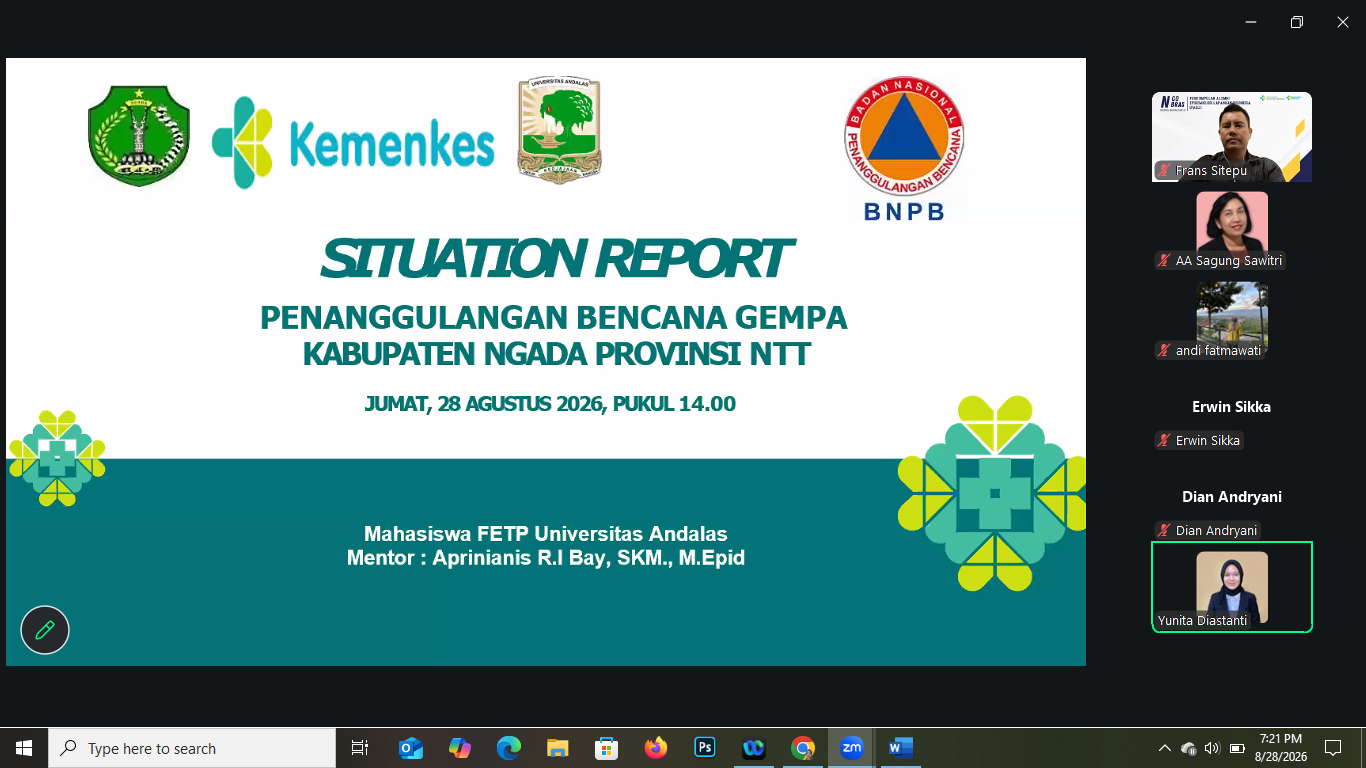
For students, the deployment offered an opportunity to apply epidemiological skills in a real emergency setting. For District Health Offices and Primary Health Care Centers, the process can support situational awareness and early identification of health problems requiring further action.
Apresiasi & Kolaborasi
As the students complete their two-week deployment and prepare to return home, we extend our appreciation to the Ministry of Health, FETP Indonesia, HSP, CDC, mentors, students, FETP coordinators, District Health Offices, Primary Health Care Centers, and all teams in the affected areas for their collaboration and support.
We hope this experience not only strengthens field epidemiology competencies, but also builds stronger collaboration among FETPs, government institutions, partners, and local health teams for future public health emergency responses.
"In emergency settings, detecting the signal early is as important as responding quickly—and a good SITREP helps connect the two."

MEDICAL FACULTY