 EN
EN
 INA
INA
MIKM Lecturers Contribute to National Epidemiological Response Discussions Following Floods and Landslides in Sumatra
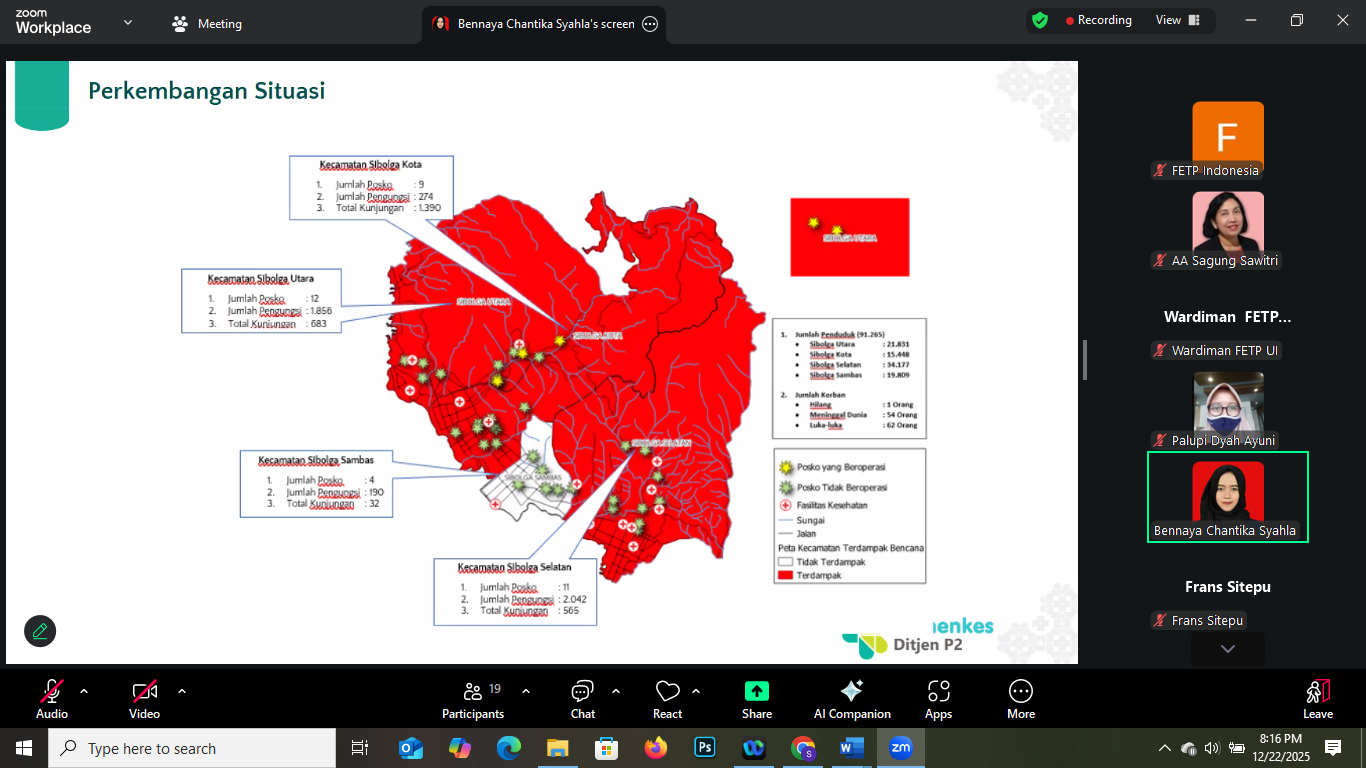
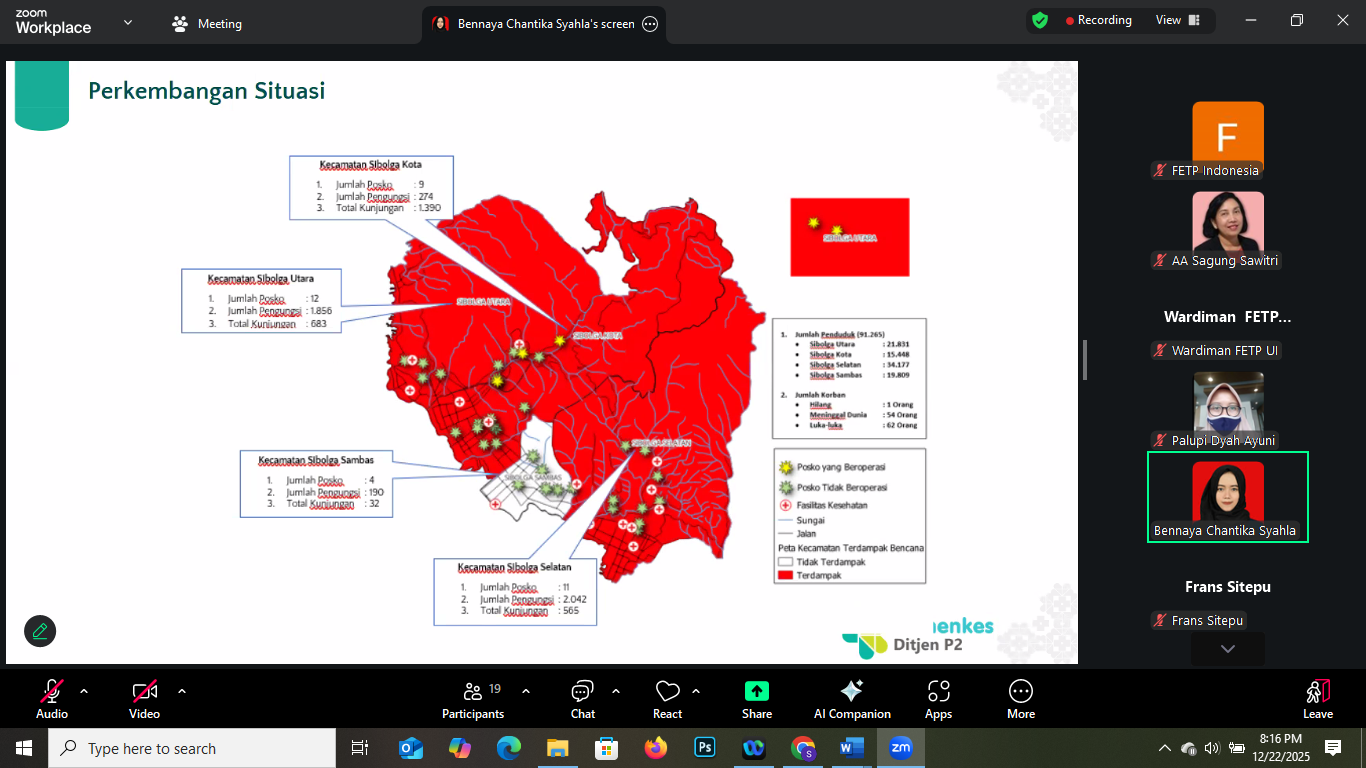
In response to the recent floods and landslides affecting North Sumatra, West Sumatra, and Aceh, the Field Epidemiology Training Program (FETP) Indonesia, under the Ministry of Health, deployed FETP students from seven partner universities to support field-based outbreak surveillance and disaster response from 18–23 December 2025.
Although students from FETP Udayana University were unable to participate in the field deployment due to unforeseen circumstances, the program continued to contribute actively through daily national epidemiological discussions conducted online during the same period.
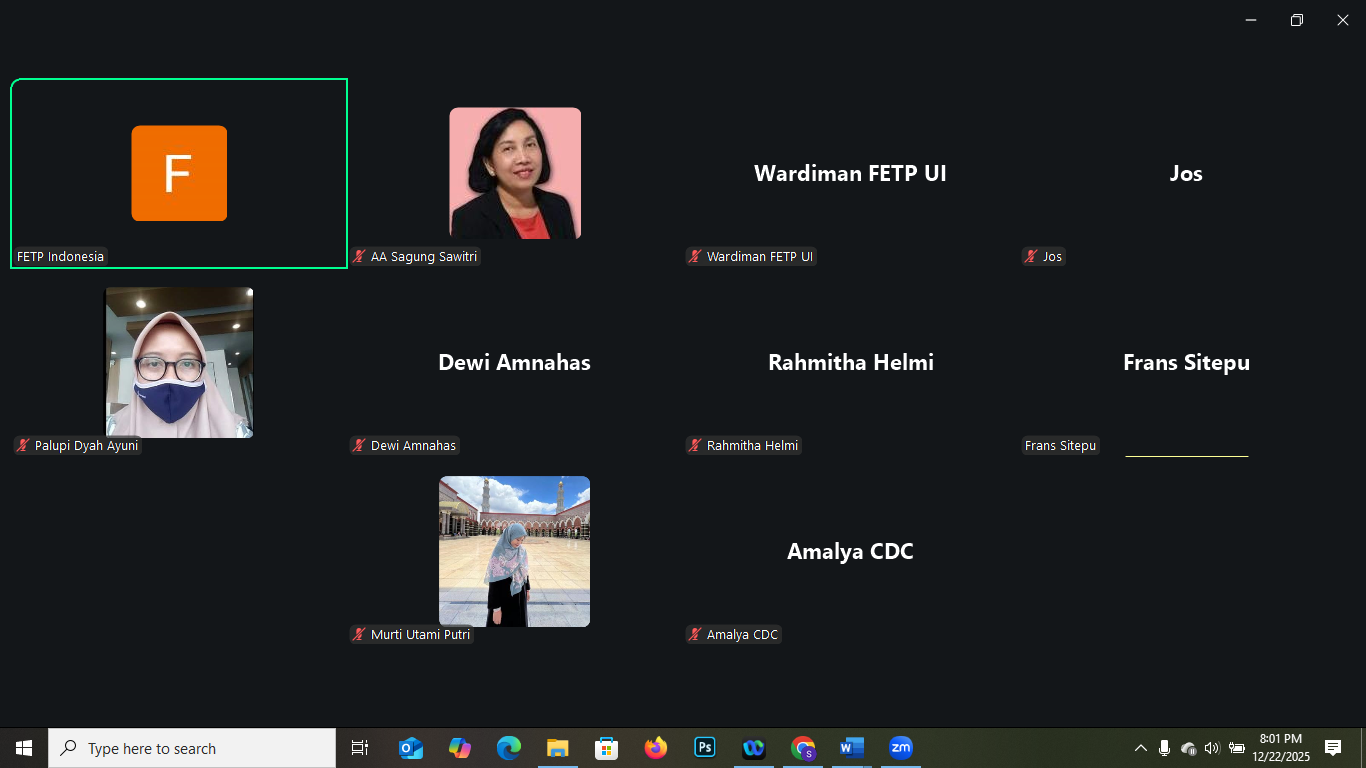
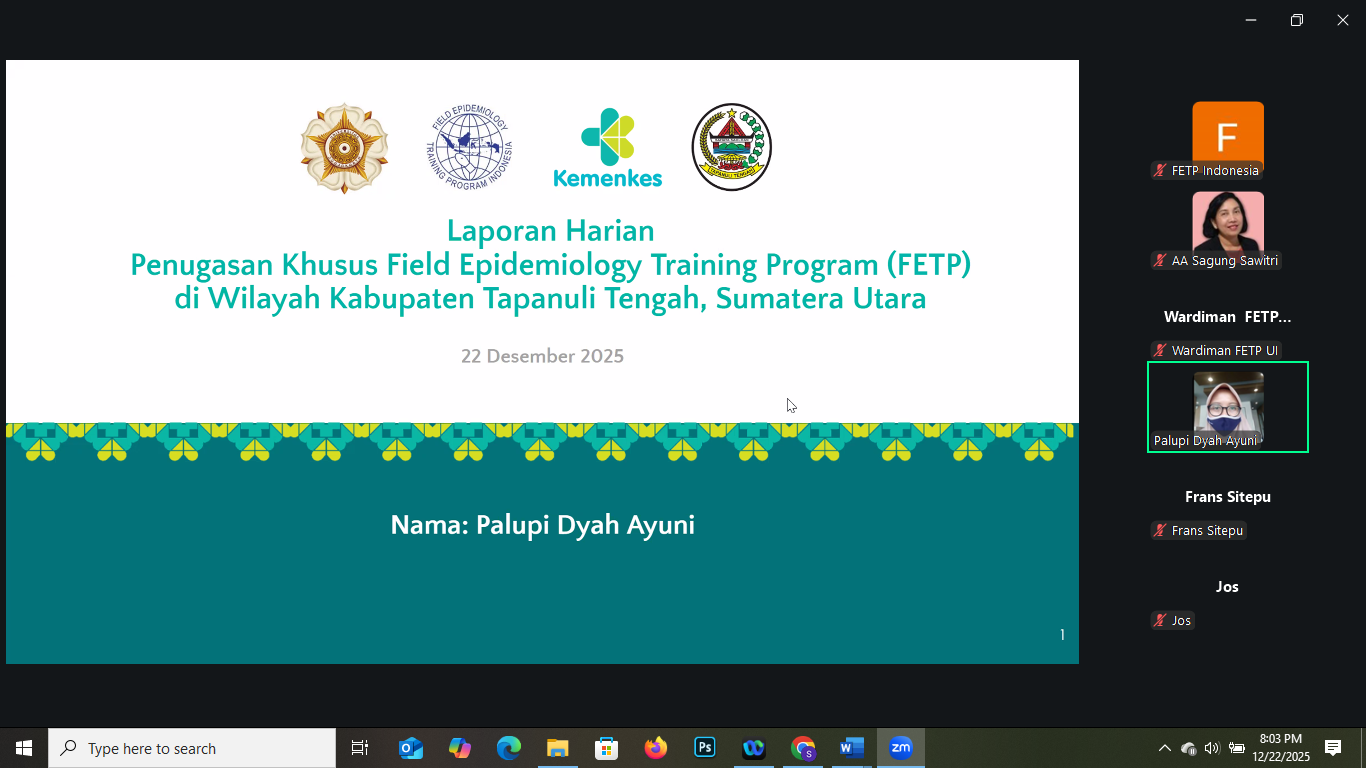
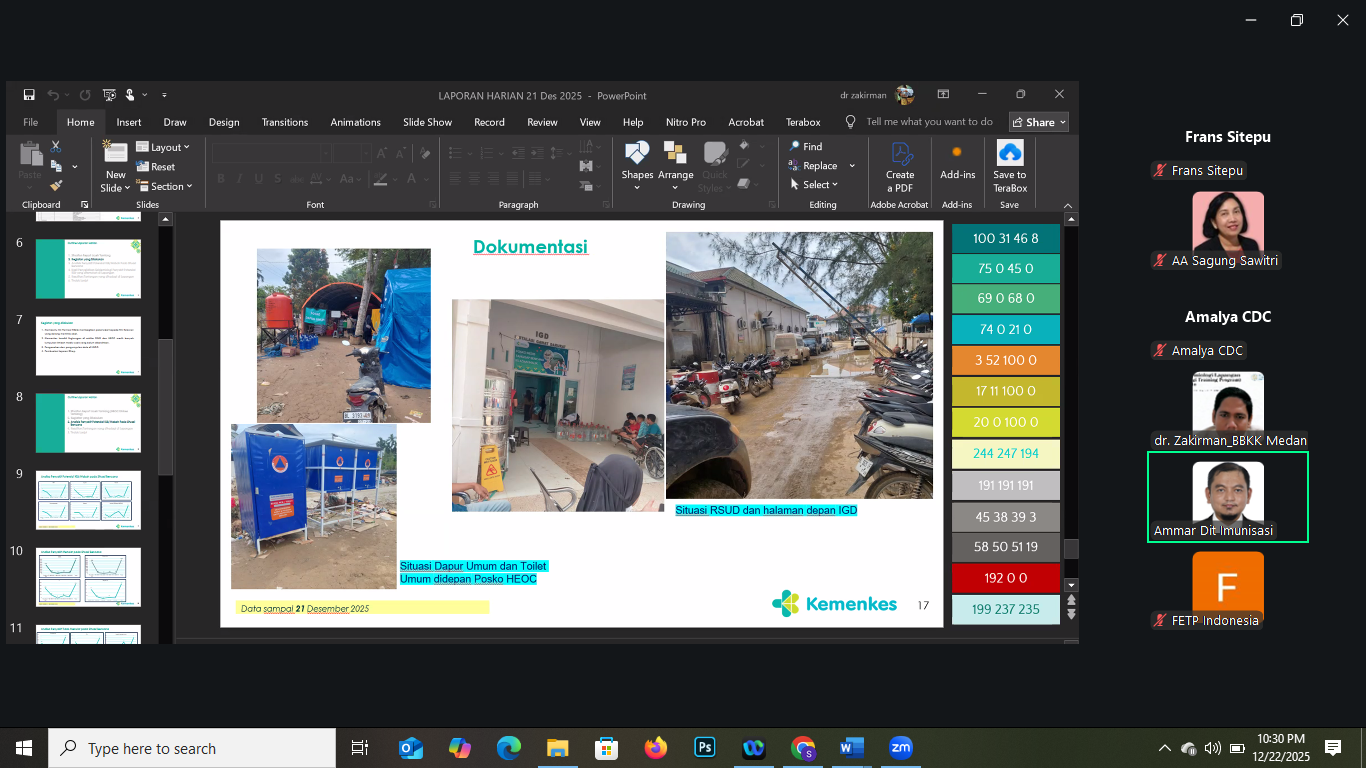
These daily Zoom-based sessions served as a platform for presenting up-to-date situation reports from the field, including disease trends, potential outbreak signals, response activities undertaken, challenges encountered, and proposed follow-up actions. The discussions were attended by a broad range of stakeholders, including FETP Indonesia, FETP representatives from other universities, the Ministry of Health (Directorate of Immunization), PHEOC, Health Security Partners, and other relevant agencies.
MIKM lecturers representing FETP Udayana actively engaged in these discussions by providing technical feedback, epidemiological insights, and strategic recommendations to strengthen the quality of students’ field reports and response planning. This contribution ensured that FETP Udayana remained connected to national response efforts and continued to support learning processes, even without direct field deployment.
Participation in these daily discussions highlights that meaningful contributions to public health emergency response are not limited to field presence alone. Through active academic engagement, MIKM lecturers supported real-time learning, critical analysis, and evidence-based decision-making during an ongoing disaster response.
For the program, this activity reinforces the role of lecturers as national resource persons and mentors, strengthens collaboration with key public health stakeholders, and sustains an academic atmosphere grounded in real-world challenges. It also provides indirect field learning opportunities for the institution, informing curriculum development and strengthening preparedness for future deployments.
Overall, this engagement reflects the MIKM Program’s commitment to responsive public health education, continuous professional development, and alignment with national health security priorities—values that contribute to institutional quality, relevance, and societal impact.
Gallery


MEDICAL FACULTY