 EN
EN
 INA
INA
Field Epidemiology in Action: FETP Udayana Students Strengthen Outbreak Investigation Skills through Real-World Deployment
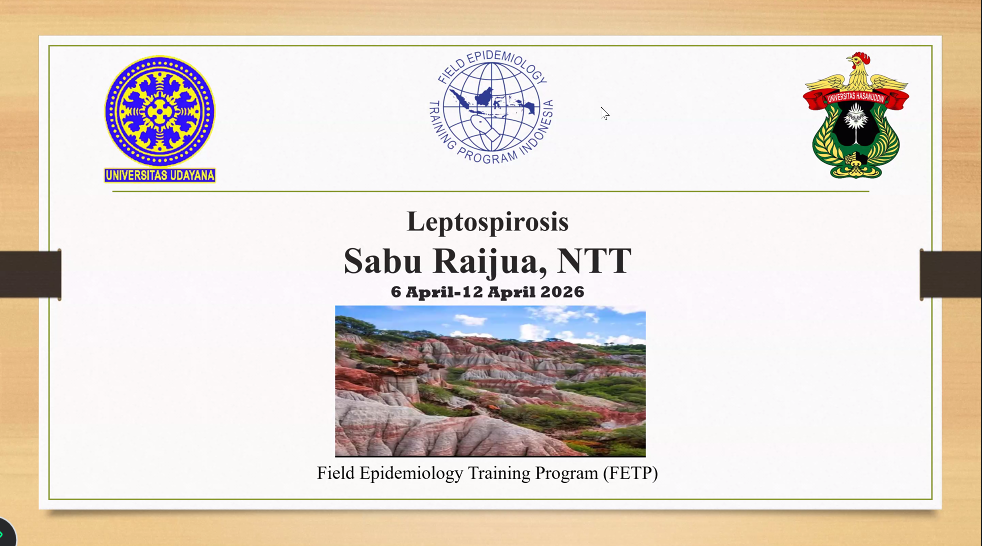
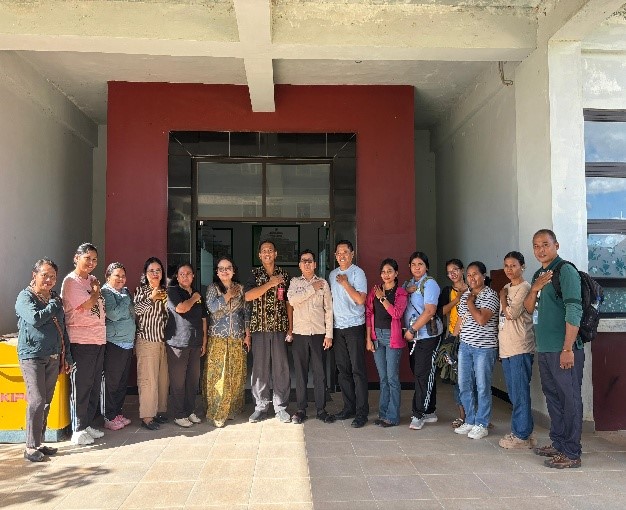
Following the completion of the field deployment of Master of Public Health students from the Field Epidemiology Training Program (FETP), Universitas Udayana, in Sabu Raijua, East Nusa Tenggara (NTT), the learning process continued through intensive discussions and report finalisation.
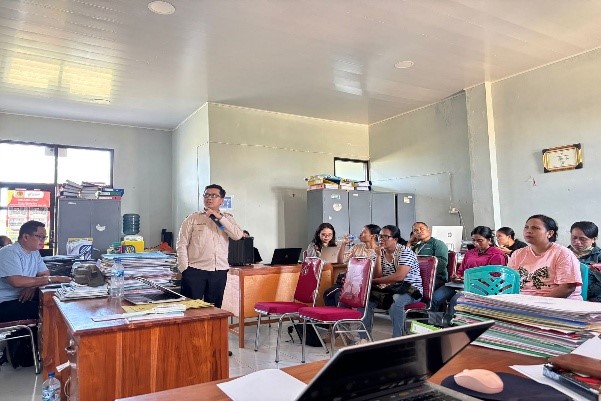
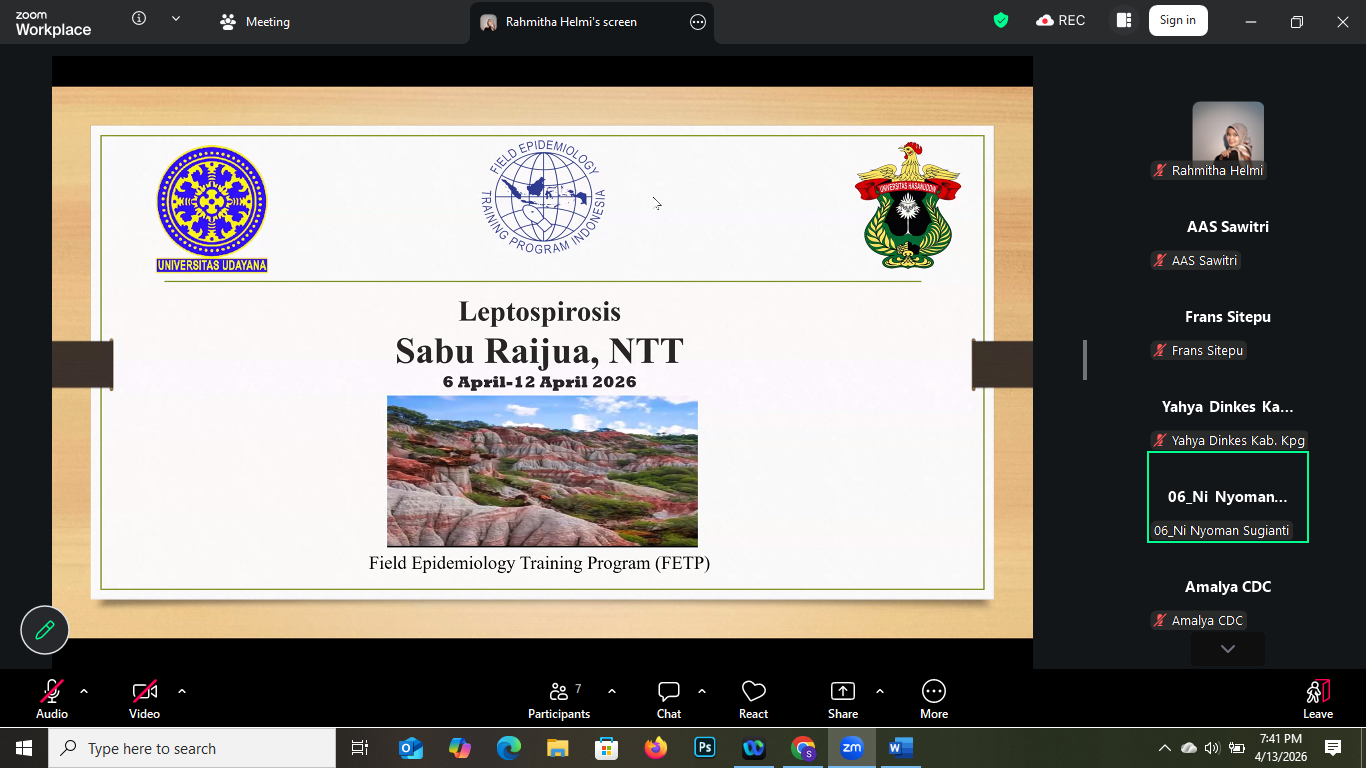
On 13 April 2026, an online discussion was conducted involving the Centers for Disease Control and Prevention (through Health Security Partnership/HSP), FETP Indonesia, supervisors from Universitas Udayana, students from Universitas Udayana and Universitas Hasanuddin, as well as mentors from the District Health Office of Kupang. The session focused on strengthening technical aspects of the outbreak investigation report, particularly issues that had not been fully elaborated in earlier discussions. Topics included the estimation of the magnitude of the outbreak using attack rates, construction and interpretation of epidemic curves, refinement of case diagnosis based on the Indonesian Ministry of Health outbreak criteria, and case definitions developed by the students for the investigation. Discussions were especially important as additional suspected cases were still being reported in the deployment area, requiring continuous interpretation of emerging information.
Multidisciplinary Perspective & Zoonosis
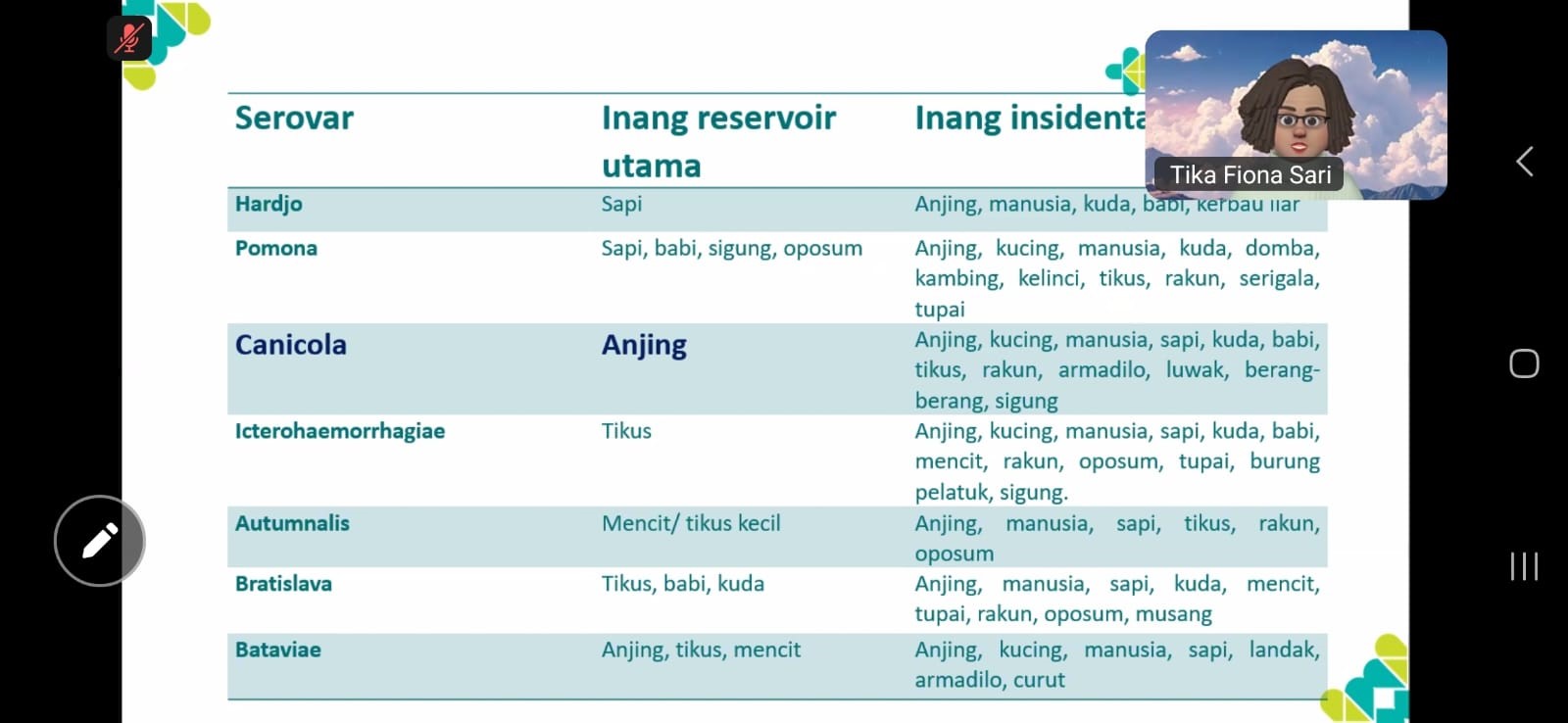
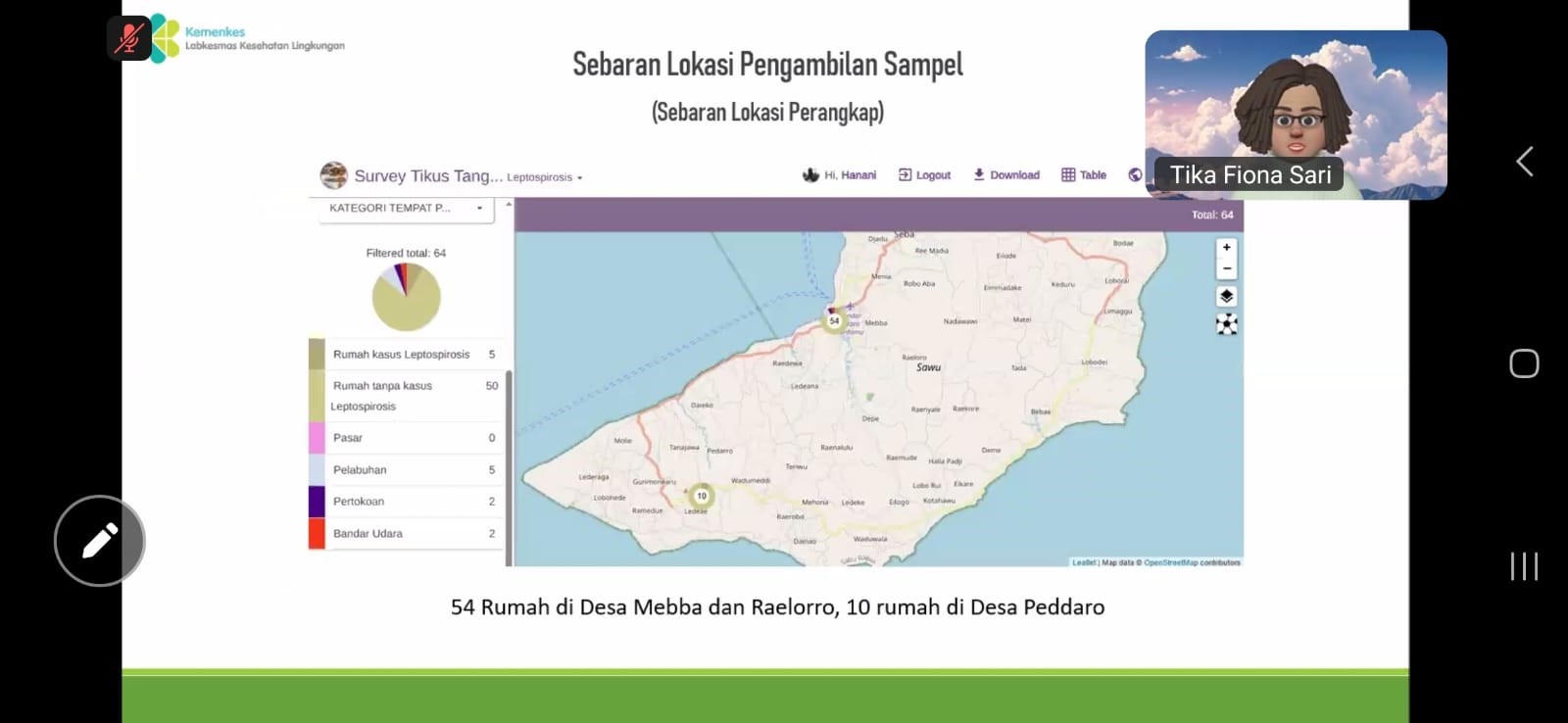
Further enriching the learning experience, on 22 April 2026, Udayana students and supervisors participated in another online session following newly available laboratory findings on rodents, which added an important dimension to the investigation. The meeting explored the theoretical aspects of leptospirosis in animals and presented laboratory findings from both animal and human cases identified during the field investigation. Experts from the Indonesian Ministry of Health, Ministry of Agriculture, and the reference laboratory in Salatiga contributed to the discussion, offering interdisciplinary perspectives on zoonotic disease investigation.
For FETP students, experiences such as these represent an integrated learning process that extends far beyond classroom teaching. Students are exposed to real-world outbreak investigations, often in settings with different cultural and behavioural contexts, while engaging directly with communities, health authorities, and multidisciplinary stakeholders. With support from field mentors, university supervisors, and national partners, students gain practical experience in epidemiological reasoning, surveillance, outbreak response, scientific communication, and intersectoral collaboration.
Importantly, these experiences contribute directly to the achievement of program learning outcomes by strengthening competencies in field epidemiology, critical analysis, evidence-based decision making, communication, and collaborative public health practice. The iterative discussion process also helps ensure that outbreak investigations become more systematic and evidence-informed, ultimately supporting more accurate recommendations for disease prevention and control.
Beyond technical skills, the deployment also fosters professional networks and deeper understanding of zoonotic diseases and public health challenges in diverse community settings—valuable assets for future public health leaders and field epidemiologists.
Gallery

MEDICAL FACULTY